
Sports injuries and ankle sprains require an assessment to define severity and guide rehabilitation. Dr. Andrea Pintor cares for active people in Guadalajara with an approach aimed at regaining function and returning to activity safely.

Sprained ankle: what to do in the first 48 hours
The first care is simple and makes a difference in recovery:
- Suspend activity and avoid supporting severe pain.
- Apply local cold in short and repeated periods.
- Elevate your foot above heart level when you are at rest.
- Use gentle compression if it does not cause tingling or color change.
- Medically evaluate if you cannot support yourself, there is a deformity or the pain is bone.
ankle sprain
Dr. Andrea Pintor explains what happens in a sprain and why complete rehabilitation prevents it from recurring.
Why recurrent sprain does require evaluation
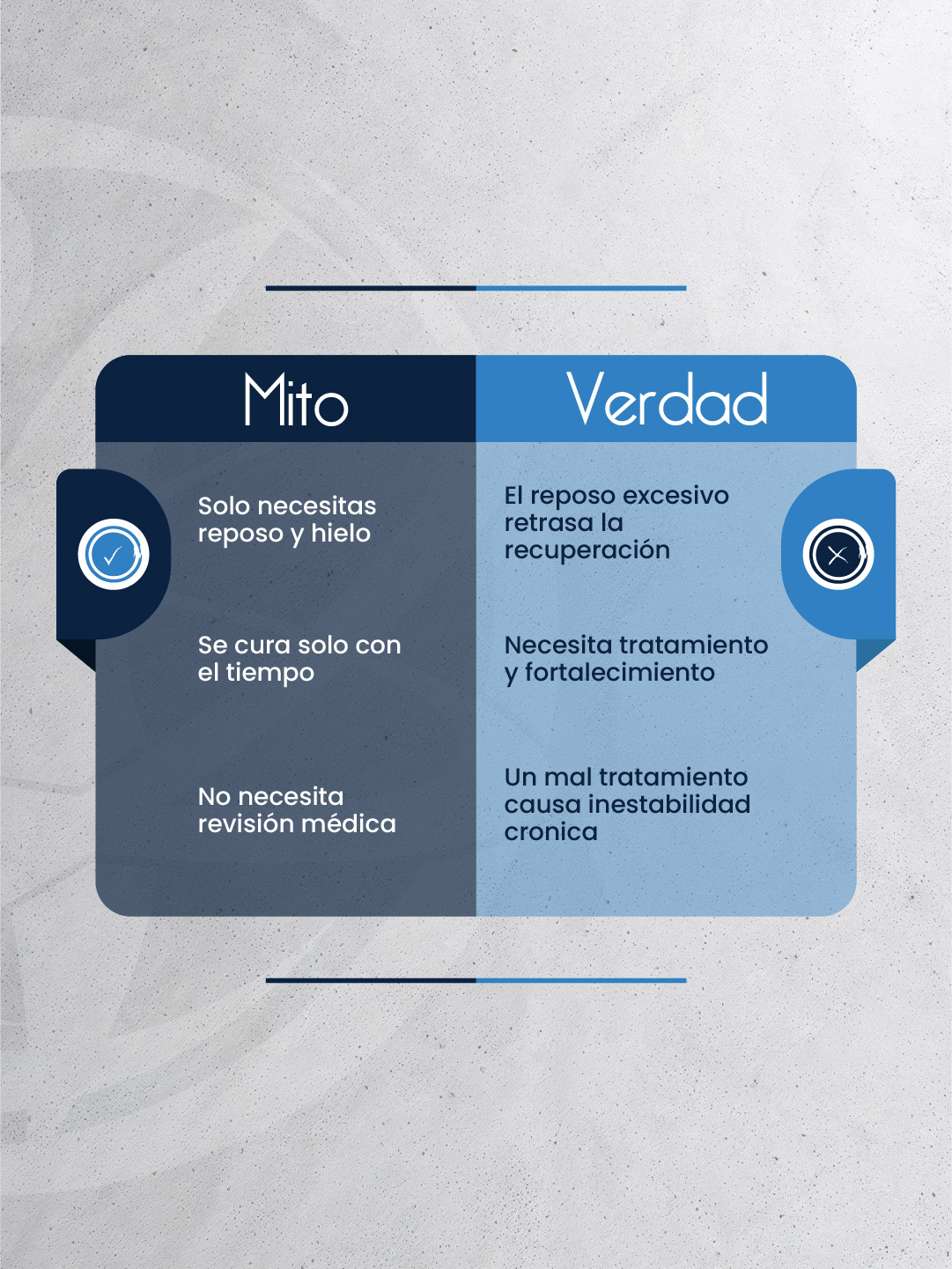
An ankle that twists over and over often indicates instability and proprioception deficits that were left untreated. The approach includes specific strength and balance rehabilitation, and not just rest.
Knee, thigh and shoulder injuries in athletes
Muscle injuries, tendinopathy and sequelae of old injuries are assessed. The plan combines load control, progressive strengthening and, when indicated, ultrasound-guided injections or PRP as part of the process, with clear return-to-activity criteria.
What is a sprain and how is it classified?
A sprain occurs when the ligaments that stabilize the ankle are stretched or torn, usually due to an inward twist of the foot. It is classified by severity: mild (stretching, discomfort, and little swelling), moderate (partial tear, swelling, and difficulty in standing), and severe (complete tear, instability) [11]. In a mild sprain, pain and swelling are limited and the foot can usually be placed on the foot with discomfort [12]. Knowing the severity guides the time and type of rehabilitation.
First: rule out fracture
Not every ankle injury requires an x-ray. There are validated clinical criteria – the Ottawa rules – that help decide when it is necessary, based on pain points and the ability to bear weight, with a very good ability to rule out fractures [14]. Imaging guidelines recommend reserving radiography for cases that meet these criteria [13]. That is why the initial assessment is key: it defines whether it is a sprain or a fracture.
A poorly attended injury
What are the consequences of not treating an injury well from the beginning and when is an evaluation appropriate?
The phases of recovery
The management of acute sprains is mainly conservative and functional [12]. In the acute phase the objective is to control pain and inflammation and protect the joint; In the intermediate phase, the range of motion is recovered and begins to strengthen; In the return to activity phase, strength, balance and sport-specific gestures are worked on, and the return is gradual, guided by evolution and not by the calendar [11]. Skipping rehab or returning too soon is one of the most common causes of relapse.
Other common sports injuries
Knee discomfort due to overuse, tendinopathies—such as that of the patellar or Achilles tendon—and muscle injuries due to overuse share a management principle: assessment to define the cause and severity, targeted rehabilitation as the basis of treatment, and progressive return to activity [11]. In selected cases, within that plan, options such as PRP are considered. The key is not to ignore persistent pain or return to sport prematurely.
Frequently asked questions
How long does it take for a sprained ankle to heal?+
A mild sprain usually improves in two to four weeks; moderate and severe ones take more and require guided rehabilitation. The time depends on the degree of injury and compliance with the plan.
Can I train while I recover?+
Almost always yes, adapting the activity. The aim is to maintain general condition without loading the injured tissue.
Do I need MRI?+
Not in all cases. It is indicated when the result will change the treatment behavior.
What are the symptoms of a mild ankle sprain?+
Pain when stepping on the foot, localized inflammation, some bruising and a feeling of slight instability. If you cannot support your foot, there is a deformity or the pain is over the bone, an evaluation is required to rule out fracture.
What exercises help rehabilitate the ankle?+
Early pain-free mobility, strengthening of the peroneal muscles, balance work on one leg and, in later stages, jumping and change of direction exercises. Progression is indicated by the stage of the injury.
What to do as first aid for a sprain?+
In the first hours: protect and rest the joint, apply cold, gentle compression and elevation, and go for evaluation if there are warning signs.
When should you go immediately after a sprain?+
If you cannot put your foot down, there is deformity, the pain or swelling is severe or does not improve within a few days, or if the ankle fails when walking [13][14].
You may also find helpful
Related articles
References
- 1.Herring SA, Kibler WB, Putukian M, et al. Initial Assessment and Management of Select Musculoskeletal Injuries: A Team Physician Consensus Statement. Med Sci Sports Exerc. 2024;56(3):385-401.
- 2.Wu V, Padilla CA, Smith NA. Management of Acute Ankle Sprains: Common Questions and Answers. Am Fam Physician. 2025;112(6):609-617.
- 3.Smith SE, Chang EY, Ha AS, et al. ACR Appropriateness Criteria Acute Trauma to the Ankle. J Am Coll Radiol. 2020;17(11S):S355-S366.
- 4.Wang X, Chang SM, Yu GR, Rao ZT. Clinical Value of the Ottawa Ankle Rules for Diagnosis of Fractures in Acute Ankle Injuries. PLoS One. 2013;8(4):e63228.
Educational content with clinical review by Dr. Andrea Pintor. It does not replace an individual medical evaluation.